
Smart Cities and Urban Mobility: Technological Innovations that Facilitate Public Transport
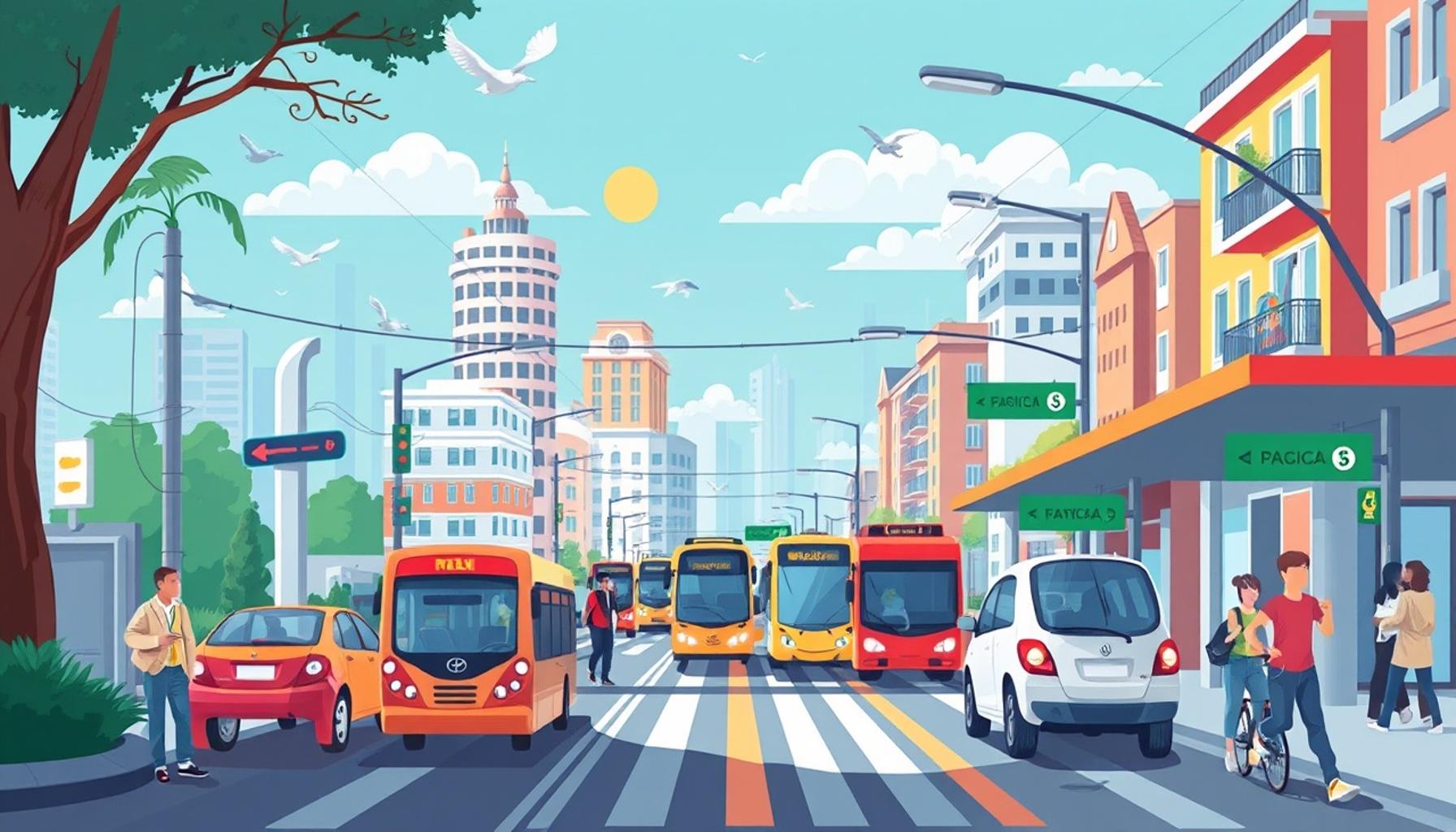
Understanding Smart Cities and Urban Mobility
In today’s rapidly urbanizing world, cities are continually seeking ways to improve the lives of their residents. Smart cities leverage technology to enhance efficiency, sustainability, and accessibility, particularly in the realm of public transport. In the face of increasing population densities, urban areas are challenged to provide reliable, eco-friendly, and efficient transportation systems to cater to their residents’ needs.
Urban mobility has evolved with numerous technological innovations, which can include:
- Real-time transportation apps: These applications, such as Citymapper or Transit, provide live updates on bus and train schedules, helping commuters plan their routes and avoid long wait times. They often incorporate feedback from users to improve accuracy, making daily commutes more predictable.
- Electric and autonomous vehicles: Electric buses and trains help reduce the carbon footprint of public transport, contributing to the fight against climate change. Autonomous vehicles, like those tested by Waymo or Tesla, aim to improve safety by eliminating human error in driving, which could lead to a significant reduction in traffic accidents.
- Smart traffic management systems: These systems use data from sensors and cameras to optimize traffic flow, decreasing congestion in busy urban areas. For example, cities like Los Angeles have implemented adaptive traffic signal controls that adjust the timing of traffic lights based on real-time vehicle density.
These advancements address pressing challenges faced by urban dwellers, such as:
- Population growth: As cities grow, so does the demand for reliable transport options. Innovations in urban mobility can help accommodate this increase in population by improving the availability and quality of public transportation.
- Reducing environmental impact: Traditional forms of transport often contribute significantly to air pollution and greenhouse gas emissions. Transitioning to electric and renewable energy-powered transport solutions can mitigate these effects, making cities more sustainable.
- Enhancing connectivity: Many urban areas are underserved and lack adequate public transport options. Smart transport solutions can ensure that even the most remote neighborhoods are connected to vital services and opportunities, enhancing overall urban accessibility.
Understanding how these technologies work together can empower communities to create more efficient urban transport systems. By investing in these innovative solutions, cities not only improve the daily lives of their residents but also position themselves as leaders in sustainable living. Citizens can benefit from the integration of smart technologies that ease their daily commutes, promote economic growth, and improve overall quality of life.
DISCOVER MORE: Click here to dive deeper
Technological Innovations Revolutionizing Urban Mobility
As urbanization progresses, cities are increasingly turning to technology to address the challenges of public transport. The integration of smart technologies into urban mobility is not merely a trend; it represents a fundamental shift in how we experience transportation in our cities. By employing innovations that enhance the efficiency, accessibility, and sustainability of public transportation systems, cities are setting the stage for a more connected and responsive urban environment.
One of the most significant advancements in urban mobility comes from the use of real-time data analytics. Public transportation agencies can now gather data from various sources, such as GPS-enabled vehicles and mobile applications, to monitor and manage their services. This not only helps in optimizing routes but also provides commuters with timely information on service disruptions or delays. For instance, in a city like New York, the Metropolitan Transportation Authority (MTA) utilizes real-time tracking systems that allow riders to see arrival times for buses and trains at their specific location, reducing uncertainty during commutes.
Moreover, the emergence of mobility-as-a-service (MaaS) platforms has transformed public transportation into a more user-centric model. These platforms integrate multiple forms of transport into a single accessible service. Residents can plan, book, and pay for their trips using one app—be it a subway ride, bus journey, or even bike rentals. A notable example is the implementation of the Transit app, which combines all aspects of urban transport, enabling users to seamlessly switch from one mode to another, thereby simplifying the commuting process and promoting the use of public transport over personal vehicles.
Another pivotal innovation is the rise of sustainable transportation options that aim to lower cities’ carbon footprints. Electric buses and trams are increasingly becoming the standard. Cities like Los Angeles have invested heavily in electric fleets that not only reduce emissions but also provide quieter and smoother rides for passengers. Additionally, the introduction of shared mobility options, such as electric scooters or bike-sharing programs, encourages residents to opt for eco-friendly transport alternatives for short distances, further easing the burden on public transport systems.
Furthermore, the incorporation of smart traffic management systems plays a crucial role in facilitating urban mobility. By employing technologies like artificial intelligence, cities can analyze real-time traffic patterns and make adjustments accordingly. For example, through adaptive traffic signals, which adjust their timing based on current traffic conditions, cities can significantly reduce congestion. Released data indicates that cities employing such mechanisms have experienced lower travel times and improved air quality due to reduced idle times at red lights.
To summarize, the advancements in urban mobility technologies not only help address immediate challenges like congestion and inefficiency but also pave the way for a sustainable future. By embracing innovations such as real-time data analytics, MaaS platforms, electric vehicles, and smart traffic management, cities can create integrated transport networks that not only meet the diverse needs of their residents but also contribute to the greater good of our environment.
DISCOVER MORE: Click here to enhance your budgeting skills
The Role of Connectivity and User Engagement in Urban Mobility
In addition to the innovations previously discussed, connectivity plays a vital role in enhancing urban mobility systems. The expansion of 5G technology across urban areas enables faster communication between vehicles, infrastructure, and mobile devices. This enhanced connectivity leads to improved services such as enhanced navigation aides, vehicle-to-everything (V2X) communication, and automated public transport systems. For instance, cities like San Francisco are piloting 5G-enabled buses that communicate with traffic lights and other vehicles to optimize routes and reduce wait times for commuters.
Another crucial aspect of smart urban mobility is the user engagement fostered through technology. Public transport agencies are recognizing the importance of involving riders in the transportation dialogue. Apps and platforms that allow users to provide feedback on their experiences, report issues, or even participate in route planning can lead to more responsive and efficient services. For example, in Chicago, the CTA allows riders to submit real-time feedback through its app, helping the agency respond to service delays or safety concerns more effectively. This two-way communication not only promotes transparency but also builds trust between the public and transportation authorities.
Moreover, the advent of autonomous vehicles is on the horizon, with many cities exploring their integration into public transport networks. Autonomous shuttles and buses have begun testing in various urban environments, providing a glimpse into the future of public transportation. Cities like Phoenix have already launched pilot programs allowing self-driving shuttles to navigate designated routes, offering a convenient, efficient, and safe way for residents to traverse their neighborhoods. As this technology advances, it is expected to reduce operational costs and improve the reliability of public transport.
Error reduction achieved through machine learning is another way technology is enhancing urban mobility. By analyzing historical travel data, AI algorithms can predict and manage passenger loads, enabling transport providers to allocate resources more effectively. This predictive ability ensures that high-demand periods are met with adequate services, minimizing overcrowding and improving overall passenger satisfaction. For instance, the Southeastern Pennsylvania Transportation Authority (SEPTA) has implemented predictive analytics to fine-tune its service schedules based on ridership trends, leading to a smoother commuting experience.
Additionally, cities are beginning to recognize the need for integrated planning that encompasses all aspects of urban design and mobility. The concept known as transit-oriented development (TOD) promotes mixed-use communities centered around transit hubs. By emphasizing walkability and access to various transportation options, cities can encourage more residents to rely on public transit for their daily commutes. For example, Seattle’s Light Rail System has sparked development projects that include housing, retail, and office spaces around its stations, demonstrating how effective planning can reshape urban landscapes.
Ultimately, these technological advancements symbolize a significant shift towards more responsive, efficient, and sustainable urban mobility solutions. By leveraging the power of connectivity, engaging users, exploring autonomous transport options, and prioritizing integrated planning, cities can better serve the needs of their residents while paving the way for a more sustainable transport future.
DISCOVER MORE: Click here to learn how to apply
Conclusion
As urban populations grow, the need for more efficient and sustainable public transport systems becomes increasingly critical. The emergence of smart cities has transformed how we approach urban mobility, with technological innovations at the forefront of this transformation. From 5G connectivity enhancing communication between vehicles and infrastructure to the integration of autonomous vehicles in public transport networks, cities are evolving into more responsive entities that prioritize the needs of residents.
Moreover, the emphasis on user engagement through apps and platforms fosters transparency and enhances the commuter experience. Cities that embrace feedback can adapt their services, leading to improved satisfaction and increased ridership. The role of machine learning in predicting travel patterns allows public transport providers to allocate resources more effectively, further alleviating overcrowding and optimizing services. Additionally, transit-oriented development strategies ensure that urban planning aligns with transportation needs, creating vibrant and accessible communities.
Ultimately, the synergy of these technological advancements envisions a future where public transport is not only efficient but also sustainable, reliable, and user-friendly. As cities continue to innovate and adapt, they will not only reshape urban landscapes but also enhance the quality of life for millions of residents, making public transport an integral part of urban living. The journey towards smart mobility is ongoing, and its successful implementation will set the foundation for smarter, greener, and more connected cities in the years to come.

Linda Carter
Linda Carter is a writer and expert known for producing clear, engaging, and easy-to-understand content. With solid experience guiding people in achieving their goals, she shares valuable insights and practical guidance. Her mission is to support readers in making informed choices and achieving significant progress.